Brussels Travel Guide
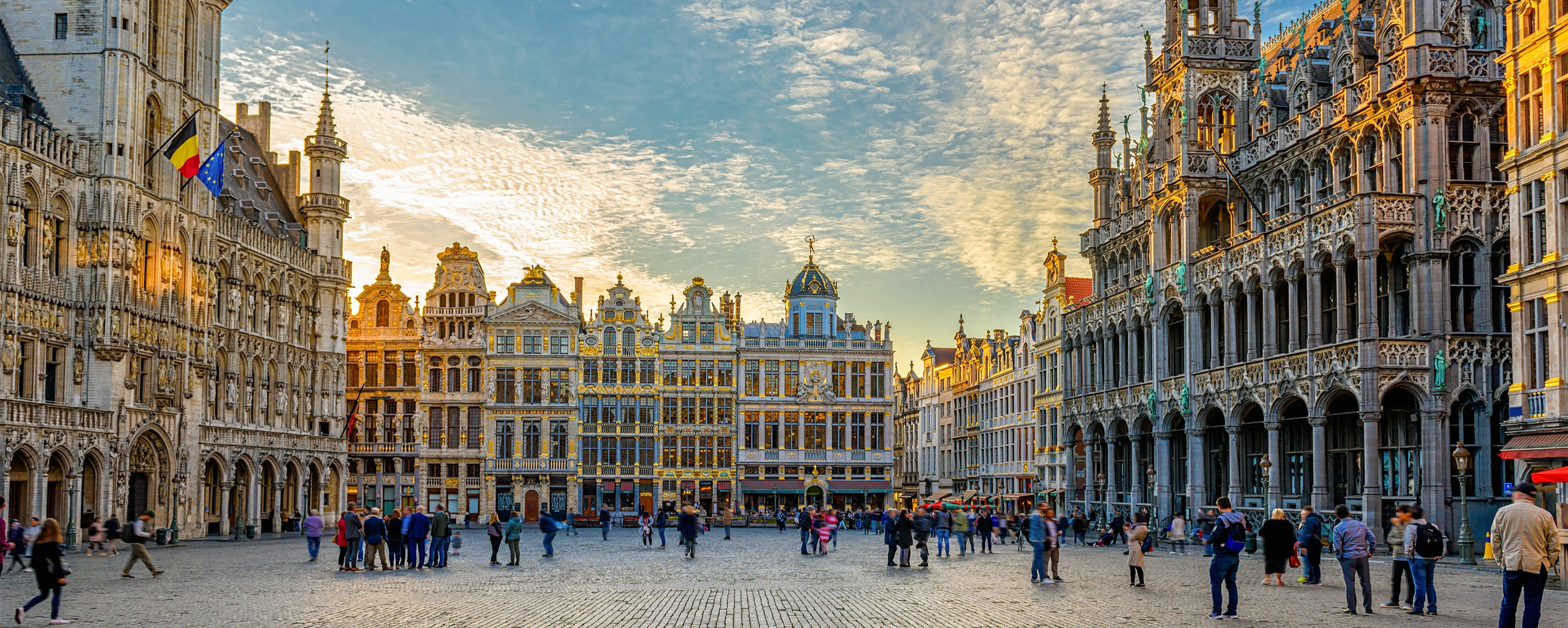
Brussels is a captivating blend of old-world charm and modern dynamism, where centuries-old guild houses stand alongside sleek EU institutions. From savoring world-famous chocolates and waffles in quaint cafés to marveling at the stunning Gothic and Art Nouveau architecture, Brussels offers a feast for the senses at every turn, promising an unforgettable journey through European history, art, and cuisine.
Brussels, the capital of Belgium, is a city with roots stretching back over a millennium. Founded in the 10th century, the settlement began as a small fortress town on the banks of the Senne River. Legend attributes its establishment to Saint Gery, who is said to have built a chapel on an island in the river. The name "Brussels" is thought to derive from the Old Dutch "Bruocsella," meaning "settlement in the marsh." This humble origin belies the city's future importance, but even in these early days, Brussels' strategic location at the crossroads of important trade routes hinted at its potential.
Throughout the Middle Ages, Brussels grew from a small settlement into a prosperous city. The 11th and 12th centuries saw significant expansion, with the construction of the first city walls and the establishment of markets that would become central to the city's economy. Brussels became renowned for its cloth trade, particularly its high-quality tapestries, which were sought after throughout Europe. The city's political importance also grew during this period, as it became a favored residence of the Dukes of Brabant. By the 15th century, Brussels had emerged as one of the most important cities in the Low Countries, a status reflected in the construction of its magnificent Town Hall and the development of the area now known as the Grand Place.
Throughout the Middle Ages and Renaissance, Brussels continued to flourish as a center of tapestry weaving and other crafts. The city's importance grew under the rule of the Habsburgs, becoming the capital of the Spanish and later Austrian Netherlands. The 19th century saw Brussels emerge as the capital of the newly independent Belgium, ushering in a period of rapid industrialization and urban development that shaped much of the city we see today.
In the modern era, Brussels has taken on a new significance as the de facto capital of the European Union. Home to the European Commission, Council of the European Union, and one of the seats of the European Parliament, the city plays a crucial role in European politics and diplomacy. This status has transformed Brussels into a truly international city, attracting diplomats, politicians, and professionals from across the globe.
Today, Brussels stands at the intersection of history and modernity. Its streets blend medieval charm with contemporary architecture, while its population reflects a diverse mix of cultures and languages. The city is renowned for its culinary scene, from traditional Belgian specialties to innovative international cuisine. Brussels also continues to honor its artistic heritage, celebrating famous Belgian comics through street art and museums, and fostering a vibrant cultural scene.
As a center of European governance, international business, and cultural exchange, Brussels faces the challenges and opportunities of the 21st century. The city grapples with issues of urban development, sustainability, and social integration while striving to maintain its unique character and quality of life. Brussels remains a fascinating study in contrasts, where ancient cobblestone streets lead to gleaming modern institutions, embodying the complex interplay between Europe's storied past and its dynamic future.
- Grand Place: Visit this UNESCO World Heritage site, the central square of Brussels. It's beautifully lit at night and surrounded by stunning architecture.
- Manneken Pis: This famous small bronze sculpture is often dressed in costumes and is a quirky symbol of Brussels. It's a quick stop and usually viewable until late.
- Mont des Arts: This urban complex offers a beautiful panoramic view of the city, especially picturesque at sunset or when illuminated at night.
- Delirium Café: If you enjoy beer, this famous bar holds the Guinness World Record for the most beers offered (over 2,000). It's a great place to experience Belgian beer culture.
- Rue des Bouchers: This narrow street is lined with restaurants and is lively in the evenings. While it's somewhat touristy, it's an experience to walk through and perhaps enjoy some Belgian cuisine.
- Comic Strip Walk: Brussels is famous for its comic art. You can take a self-guided walk to see large murals depicting famous Belgian comic characters painted on buildings throughout the city center.
- Royal Palace: While you can't enter in the evenings, the exterior is beautifully lit at night and worth seeing.
- Place Sainte-Catherine: This area comes alive in the evenings with its many restaurants and bars. It's a great place to enjoy seafood if you're interested.
If you only have time for a brief walk around Brussels, here are a few areas that are particularly good for exploring on foot:
-
City Center/Historic Core:
- Start at Grand Place
- Wander through the surrounding narrow cobblestone streets
- Pass by Manneken Pis
- Explore the covered shopping arcades like Galeries Royales Saint-Hubert
-
Sablon Area:
- Known for its antique shops and chocolatiers
- Visit Place du Grand Sablon and Place du Petit Sablon
- See the Gothic Church of Our Blessed Lady of the Sablon
-
European Quarter:
- Walk along Rue de la Loi to see the major EU institutions
- Visit the Parc du Cinquantenaire with its triumphal arch
-
Mont des Arts and Royal Quarter:
- Enjoy the gardens and city views from Mont des Arts
- Walk past the Royal Palace and through Brussels Park
-
Saint-Gery neighborhood:
- A trendy area with many cafes and bars
- Centered around the old market hall, now a cultural center
Immerse yourself in the culinary heritage of Belgium and Brussels by trying:
- Moules-frites (Mussels and fries): A national dish, often served in a large pot with various sauces
- Belgian frites (Fries): Typically twice-fried and served in a paper cone with various sauces
- Carbonnade flamande: A rich beef stew cooked with Belgian beer
- Stoemp: Mashed potatoes mixed with other vegetables, often served with sausage
- Gaufres (Belgian waffles): Try both Brussels (rectangular) and Liège (round) styles
- Waterzooi: A creamy stew traditionally made with fish, now often with chicken
- Boulets à la Liégeoise: Meatballs in a sweet-sour sauce made with Sirop de Liège
- Speculoos: Spiced shortcrust biscuits
- Belgian chocolate: Try pralines from renowned chocolatiers
- Belgian beer: While not food, it's an essential part of Belgian culinary culture
- Filet américain: Belgian-style steak tartare, often served with fries
- Mitraillette: A sandwich filled with meat, fries, and sauce - popular street food
For the best experience, try moules-frites, Belgian frites, and waffles from street vendors or casual eateries. Dishes like carbonnade flamande and waterzooi are best enjoyed in sit-down restaurants. Don't forget to pair your meals with Belgian beers!
Explore Brussels's culinary landscape at these local hotspots:
- Aux Armes de Bruxelles - Known for traditional Belgian dishes, especially moules-frites
- La Roue d'Or - Good for trying carbonnade flamande and other traditional dishes
- Fin de Siècle - Casual bistro atmosphere. Serves hearty portions of Belgian comfort food
- Maison Antoine - One of the most famous friteries in Brussels
- Le Chou de Bruxelles - Known for traditional Belgian cuisine, including waterzooi
- Brasserie de la Roue d'Or - Good spot for trying Belgian beers along with traditional food
- Comme chez Soi - An acclaimed fine-dining restaurant known for its exquisite dishes $$$$
- Restaurant Le Rabassier - Specializes in French cuisine with a focus on truffles $$$$
- Fin de Siècle - Offers traditional Belgian fare in a cozy setting
- Fanny Thai - Known for its authentic Thai cuisine
- The Lobster House - Famous for its exquisite seafood dishes
- Le Bistro – Porte de Hal - A cozy brasserie with a diverse menu
- The Blue - Features a Mediterranean-inspired menu
- Comptoir des Galeries - Offers Belgo-French cuisine with a creative flair
Explore Brussels's brewery landscape at these local hotspots:
- Cantillon Brewery - Known for its traditional Lambic, Gueuze, and Kriek beers. It’s also home to the Brussels Museum of the Gueuze
- Brussels Beer Project - A modern brewery that experiments with innovative beer styles
- BeerMania - Offers a wide range of Belgian beers and has a cozy bar where you can sample them
- Beerstorming - A unique concept where you can participate in brewing sessions and create your own beer
- Brasserie de la Senne - Famous for its naturally brewed beers like Taras Boulba and Zinnebir
- La Source Beer Co - A microbrewery with a bar where you can drink straight from the vats
- Moeder Lambic - A popular spot with an extensive selection of Belgian and international beers
- A La Mort Subite - A historic bar known for its Gueuze and Lambic beers
- Delirium Café - Renowned for its vast beer menu, featuring over 2,000 different beers
- L’Ermitage Nanobrasserie - Offers a variety of craft beers in a cozy setting